

Flight to Insight: How AEP Ohio is using drones & AI to turn inspections into uptime
Speakers

Jake Reed is the Project Manager that manages the drone program for AEP Ohio. He started working for AEP Ohio in January 2023 and has been working to expand the use of drones and associated technology ever since. AEP Ohio is currently leveraging drones for circuit inspections, targeted reliability assessments, storm response, and BVLOS circuit monitoring and outage response.

Park recently joined Skydio as the Sr. Director of Energy Strategy after 15+ years at the New York Power Authority. Her experience in the utility industry spanned Engineering from design to commissioning through multiple Life Extension and Modernization programs in Power Generation before a shift to Strategic Operations and Asset Management. As Sr. Director of Asset Intelligence Solutions, she led the comprehensive effort to operationalize technology across the enterprise. By standing up the Reliability Centered Maintenance program and identifying the gaps for Technical Enablement to bring solutions to scale, her department tested and incorporated robotics, sensors, and data analytics to connect problems to solutions. Park graduated from MIT with her BS and MS in Mechanical Engineering.
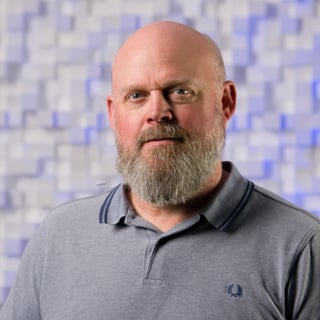
Corey joined Skydio as a utility solutions specialist in early 2023. Prior to Skydio, Corey led UAS Program Development and Operations with Southern Co. Aerial Services. Corey developed methods for operating drones across the nuclear, gas, and power verticals, notably flying one of the first UAS inspections on an operating nuclear reactor. At Skydio, he is developing dock based drone use cases for autonomous inspections as well as focused routine, event based, and security inspections for substations. These dock based inspections are focused on reducing the duration and frequency of outages, allowing for predictive based maintenance plans to be implemented.
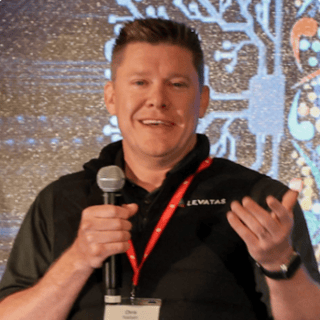
Chris Nielsen is the Founder and CEO of Levatas, an AI software company that powers autonomous visual inspections for critical infrastructure and enterprise assets. Under his leadership, Levatas delivers market leading computer vision and generative AI solutions that turn drone, robot, and fixed-camera data into real-time, actionable insights for global leaders in energy, utilities, and manufacturing.
SUMMARY
One missed defect on a critical structure can mean millions in outage costs and penalties. See inside American Electric Power’s inspection program and how they use autonomous drones and computer vision to find problems earlier, cut truck rolls, and keep crews off hazards.
Hear from AEP Ohio's drone program manager, Jake Reed, as he walks through how AEP designed and scaled their program, from first pilots to daily operations. Jake explains how Levatas's computer vision automatically recognizes and flags defects so alerts reach the right teams without hours of manual video review. You'll also see how Skydio autonomous drones and Skydio Cloud stream live inspection feeds to operations centers and sync data into Levatas and other systems of record, enabling inspections at scale.
What to expect:
- Learn how AEP’s workflow goes from flight to automated defect detection to routed alerts with less human intervention
- See where AEP is replacing manual climbs, truck rolls, and helicopter hours with standardized digital inspections
- Examples of real inspection data, the defects Levatas flags, and how those insights feed maintenance and storm preparation
- A live remote flight of the Skydio and Levatas inspection solution, followed by an open discussion of what has worked and what AEP would - change starting from zero
TRANSCRIPT
Hello, everyone, and welcome to flight to insight, how AEP Ohio is using drones and AI to turn inspections into down into uptime sponsored by Skydio. One missed defect on a critical asset can mean millions in outage costs, safety risk, and reliability penalties. As utilities face growing asset footprints and workforce constraints, inspection programs are under pressure to find problems earlier and do more with the people they already have. Today's session offers a practical look at how American Electric Power is using autonomous drones and AI driven computer vision to scale inspections, reduce manual climbs, and truck rolls, and improve visibility into asset condition.
You'll hear how AEP built its program from early pilots into daily operations, how Levitas automatically flags defects without hours of manual video review, and how Skydio's autonomous drones and cloud platform enable inspections at scale and feed data directly into operational systems. Joining us today, Chris Nielsen, founder and CEO of Levitas, which delivers AI driven visual inspection software for critical infrastructure. Jake Reed, project manager at AEP Ohio, where he manages the utility's drone program supporting inspections, reliability assessments, and storm response. Corey Hitchcock, utility solution specialist at Skydio focused on autonomous and dock based drone inspections for substations and critical assets, and Christina Park, senior director of energy strategy at Skydio with more than fifteen years of utility experience spanning engineering, asset management, and enterprise technology deployment.
Full bios are available in the presenter tab. Without further ado, I'll toss it over to Christina to begin our presentation today.
Thanks, Kevin. We are so excited to be here today. I was gonna introduce everyone, but it appears Kevin has already done so. I think that we will have a little more information on each of our backgrounds. But speaking for Corey and myself specifically, we both have careers that started and, spent the majority of our careers, at utilities, Corey at Southern Company with Georgia Power, and myself at the New York Power Authority. So, us being at Skydio was part of an effort to bring industry expertise in house to really try and connect the problems to the solutions, and I know that's a philosophy that Levitas embodies as well. So we are really excited to be here along with Jake to really showcase the great things that a u p AUP Ohio is doing to operationalize technology and really drive operational value.
So for a quick run through of today's agenda, we will start with a brief overview of Skydio and Levitas AI, and then really center today's discussion on AEP and what they are doing with their drone program. It's very, very exciting. I think that technology has gone from being something that is a proof of concept to something that is really becoming embedded in utility workflows and driving operational value as Jake's program has done so well. So we're really excited to showcase that.
Then there will actually be a live remote flight demo and AI results review. So this is something that the partnership between Skydio and Levitas AI, has produced for this flight to insight concept, because nobody wants to sit and have to deal with all the integrations and all of the NDAs and and the paperwork to go working with different vendors. So we have really partnered together to make it as seamless as possible, for the utility user. And then we'll have an interactive q and a with all the speakers.
As Kevin mentioned, please drop your questions in the q and a, which is, I think, on the sidebar. Those questions will come to us, and we will answer as many as we can. And if there are any we don't get to, we will certainly follow-up afterwards.
And then how to connect with us because we'd love to connect with you afterwards. So I will start with Skydio. Skydio is the leading leading autonomous drone manufacturer. We are based in San Mateo, California, and all of our design, manufacturing, and assembly is done here in the US. So this is very important for many reasons, but primarily for security, for your data, for your supply chain. And it also streamlines our processes because our headquarters and our manufacturing facilities are just a fifteen minute drive apart from each other, and we're able to collaborate and communicate internally, very, very quickly. So, I first heard about Skydio when I was at the New York Power Authority because we were looking at the first dock solution when dock solutions were first coming up.
And we will focus on the benefits of remote operations today, but we're very excited to be the industry leader in autonomous drones, really taking, the difficulty of flying drones and the risk out of the hands of the user and being able to place it in the hands of the people, who can make the decisions, rather than focusing just on flying the equipment itself. So we're excited to showcase a lot of our capabilities, which will actually be done through some of the work that Jake will present as well as the demo later. So I will hand it over to Chris at Levitas.
Sure thing. Thanks, Christina. Everyone, it's wonderful to be here with you this morning on the Flight to Insight webinar. My name is Chris Nielsen. I'm the CEO here at Levitas. We build computer vision AI models and a delivery platform that helps our customers identify defects on their grid, at their station level, transmission networks, you name it.
We partner with Skydio. We are fully integrated into the Skydio cloud, which means that you can get insights immediately while the drone is still in the air as well as post flight processing for more high precision, high accuracy AI models. We're gonna show a little bit more in the flight demo, but as we talk through the who, what, where, and when of Levitas, I will just walk through a couple of our workforce capabilities. So out of the box, the Levitas AI plus Skydio joint solution, unlocks thermal anomaly detection for all asset types, effectively turning, the Skydio x ten drone and drone dock system into a flying thermal sensor. We're gonna show you a little bit more about this here in later in the webinar. We're also able to enable faster restoration timelines, whether it's PSPS restoration or post storm response, by identifying anomalies to poles and power lines and, distribution assets, following these events.
We can identify equipment, both damage type as well as the classification or a severity score of the damage. What you are seeing here are real results, from the field, and we're gonna be flying here live in just a moment. Corrosion detection on assets, many of our utility customers have assets that are, open and exposed and experiencing corrosion. So identifying that, and and, understanding the volume and the severity is really important.
And then finally, we have a high precision analog gauge reading model. We know that, there are so many of these, so many types, across our customer service areas that reading them with high accuracy is incredibly important and can enable faster response and restoration, time lines. So we're gonna be showing you this, here in just a moment live. These are features and capabilities that we are bringing to bear with our great partners, like Jake Reed at AEP Ohio and beyond, and, we're excited to show you more here in just a moment.
So, Christina, I'll kick it back to you.
Thanks, Chris. So I think we're actually going to go to Jake. So if, Jake, you could give us a bit of a background on AEP, particularly AEP Ohio, as you are not just one entity but made up of different opcos.
Yeah. Absolutely. Thanks, Christina. So, again, we are AEP, four thousand miles of trans transmission network, twenty nine thousand megawatts, and operating in eleven states with, with seven opcos.
One of those opcos being AEP Ohio, where we serve, one point five million customers with, ten thousand square miles and, forty seven thousand distribution line miles.
Today, we'll be kinda talking about the, some some thousands of power interruptions we saw between October of twenty three and October of twenty four and, those inspections that went with that.
So in twenty twenty five, we piloted drone inspections by drone, whereas we would typically do those on the ground with inspectors, and we inspected four percent of our entire distribution system. And with that, we were able to find, a hundred and fifty plus tier one issues, those being, lens on lines and majority of them being thermal anomalies found with drone and the the thermal sensor. So, additionally, we were able to get a a single pic or, well, multiple pictures of every asset, depending on on our shot sheet. And, historically, with our inspections, we would be just getting pictures of issues.
So, we had a ton of imagery to review. We had between four and five hundred thousand images of our assets, that a single person went through the entire year spending five hundred plus hours going over that. So, kinda what started this, this, partnership trying to work and getting some sort of AI, image analysis so that we could spend more time flying drones and, you know, less time going through every single image.
So I'll show you a couple interesting finds that we have.
Jake, before we go forward, can I just, ask for a a little more color? Because I think your story is pretty interesting.
In terms of going I think you had multisteps.
Right?
And even from last year to this year is is a big step forward.
So when you think about it from an asset management perspective, and I'm partial to that because that's where I came from, Just what is the benefit of using technology compared to the amount of coverage that you were able to get for your assets in the past? Because I know from my own experience, a lot of, asset management ends up being reactive when somebody, when something fails or when the power goes out and you have to go fix it. But I know AEP Ohio is really trying to be very proactive about asset inspections to get ahead of those failures.
Yeah. So the majority of these tier one issues were not causing an outage. Right? So we were able to proactively fix these and, reduce those customer minutes of interruption, that we would have seen had we seen a sustained outage with with those fines.
Yeah. And how do you measure that? Is that something that you have, kind of internally in your systems, to look at, like, versus now?
Yeah. I mean, we we calculate the the, you know, estimated customer minutes of interruption by isolation devices and, you know, historical numbers of what that piece of equipment would have caused an outage from, and we're able to then, again, estimate that customer minutes of interruption that we were able to avoid.
Yeah. This is awesome. And I just wanted to kind of highlight this because I think that, having been on the utility side and also the technology side, I think one of the hardest things to do is to kind of ascribe value, to your program and to show I implemented, a new program, a new technology, a new way of doing things, and this is how I measured that it made a difference against how I'd done in the past. So I think it's super exciting what your program is doing, to actually put metrics behind it, to show that it is actually making a difference as opposed to just kind of being a science project on the side.
Yeah. Absolutely.
Yeah. But let me let me hand it back over to you because you have some really, really cool examples that we'd love to dig into.
Okay. Yeah. Yeah. So here, you can see those jumpers are hot and, again, not causing an outage.
I think they were at right around two hundred fifty degrees. So, you know, as those those start to get hotter and hotter, they would eventually fail, causing a sustained outage. We were able to get crews out there to fix that. So, this next one here is a pretty interesting one as well.
You know, one of our our these all, livestreamed back to our our office here. We're able to to watch them. So one of the guys kinda called back, was saying, hey. Some something doesn't look right.
You know, we thought maybe initially the the thermal camera was was damaged or or something like that. But come to find out, this it had rained earlier in the morning, and they were able to replace this pole. And when they cut that open, it kinda looked like a cigar. So it was burning from the inside out.
Again, something that we wouldn't have have caught, right, from just driving by and or or walking that. So here's a pretty typical find here. Again, you may see this from the ground, but I still think this could be easily missed.
You know, these are, again, not causing an outage quite yet. You know, some more contact with that that cross arm there, and, that cross arm could burn off completely. So we're able to find that. And then this kinda just gives you the perspective that that we can see from the air instead of the ground.
This was actually a data driven assessment where, there was some some flickering lights, and and we were able to get a drone out there and, see this this unfortunate guy up top on this piece of equipment. Again, not not causing an outage, and I don't think this would have been found had we not had drones.
Yeah. Jake, I think these examples are super compelling. And I know that, you had said earlier that starting to implement thermal, was kind of a difference. So do you feel like these, I I feel like I'm hearing two things. One is that having a view up top where a ground inspector would not have been able to catch it has probably led to some proactive maintenance that you have wouldn't have been able to do?
Yeah. Again, we we calculate avoided avoided customer minutes of interruption that we estimate. And in the past couple years, we're well over thirty million customer minutes of interruption that we've been able to avoid from finding these these instances.
Great. Well, it sounds like you had a pretty successful proof of concept in twenty twenty five. So we're super excited to see what you have planned for twenty twenty six.
Yeah. Yeah. So, again, like I said, in in twenty five, we we, inspected four percent of our entire system as a pilot program.
So they you know, those those fines and and everything we we were able to to do with that program, you know, our our leadership really liked that, and and saw the the benefit in it. So we're now taking on the, all of our overhead inspections by drones as well as a a little bit more so that we can line our our inspection program up with our veg program. So, we're also looking to leverage our docs, mainly the the mobile one that we have now, hopefully, more in the future so we can move those around strategically to then be able to remotely fly drones for inspection instead of having to have boots on the ground. So, really excited about that and looking to, some sort of Levitas integration for that as well, trying to again, if we extrapolate out our our four to five hundred thousand images, it's just not sustainable for for, you know, one person to go through. So really looking for that, that help on that side as well.
That's great.
Yeah. That's awesome. I think as as technologies kind of become implemented and a little bit more mainstream, that's one of the major problems that we've seen at a lot of utilities, just that, getting all the data that's been hidden in plain sight that you didn't have is great, but then you don't actually save the manpower if someone has to look through all that data, where most of it probably is, like, check, check, check, This is fine in order to find the actual defect that you would be looking for that might cause an outage. So I think that partnership's really important. I think I wanted to back up a second because I think maybe not everybody may be familiar of what a doc is, and maybe I should have introduced that better in the beginning.
But a dock is actually a solution for the drone so that you can operate the drone remotely. So these are basically these garages, which you'll see in the demo shortly that you can put out there. You can put them out typically, people like to put them in substations because they're fenced in and they're security and you have a lot of control, but you can put them pretty much anywhere. It is highly favorable to put them out in remote areas where you don't wanna send a person either because access can be dangerous.
We have some Japanese customers actually who are really interested in docks because there are certain power plants where the roads to get there just aren't well maintained, or there are risks of bears that come out and kind of attack the people as they're trying to go and do these inspections. But they enable you to basically inspect as frequently as you like without actually having to have a person there. So, I know AAP Ohio has leaned into this. And what Jake is saying about mobile dock is that, the dock itself is fixed to the ground for stability, and and things like that, but we are opening up the avail the ability to actually fix a dock and then move that to another fixed location in order to get the maximum value, particularly in areas where depending on your inspection and maintenance frequency, you may want to not necessarily need one every day.
So really excited for the work that you're doing there.
I think we can move forward here. So one of the things that we're working with you, Jake, on is something new at Skydio that we launched this past September called asset based inspection. So another thing that we're really, really concerned about is looking at the utility workflow and how to really integrate into the workflow so that implementing a new piece of technology becomes a part of the existing workflow instead of a separate workflow. So what we can see here is a bit of a diagram where there are existing platforms. I think every every utility there are a few there are handful of common ones, but, typically, everyone has some sort of asset portfolio and some sort of risk management OMS system that alerts you to, when there's an error on your system. So for Jake, Jake, for you guys, what what platforms do you guys use?
We have a lot of in house kinda dashboards and and whatnot that we we have, and then OMS where we track all of our outages.
Right. And then I think you also use Esri. Right?
Oh, as far as mapping, yeah, we we're an Esri shop. Yeah.
Yeah. So a lot of utilities will use platforms like Esri for geospatial location.
I think especially for you and distribution, being able to have an asset database and locations of your poles and what you're trying to inspect is very important. One thing we found, particularly in distribution, is that a lot of utilities, it's very hard to keep up with your asset registry and keep everything current when when things are being fixed and replaced kind of in real time. And so one thing that we found when it comes to inspections is that not only from the inspection level from the drone operator is it a little bit cumbersome to sit and plan these manual waypoint missions, but it's also, a different story once you went to go inspect a pole and you thought it was here and it's actually over there, and the lat longs don't necessarily correlate.
So, this is some work that we're doing together, with AP Ohio and a few other select customers to really try and understand how to bring in the asset data that currently exists within the utility, leverage that to plan the missions and fly, more efficiently, but then also with these blue arrows, come back and be able to update, the information that exists in your asset registries, and in your, risk management systems so that you can have accurate digital records. So I know digitization is something that's becoming really important, and this is just a little snippet of some of the work that we're doing, on a stretch of distribution polls, just being able to, select a a group of assets either by asset name or just with your cursor, and then the mission just automatically pops up, puts in where you're allowed to fly, and you're able to fly it right away.
So, Jake, do you have any, impressions on the work we've been doing so far?
Yeah. I mean, it's been great, you know, with with a little bit of tweaking of our our asset location data. I definitely see this being very advantageous for our our team.
Yeah. And and from the Levitas AI standpoint, computer vision thrives, with high quality data. And, asset based inspection ensures that providers like Levitas are able to get really consistent, high resolution, perfect zoom, perfect height each time, and that feeds great data into our computer vision models to deliver higher accuracy, AI results. So, really excited about the asset based inspection feature from SkyView.
Thanks, Chris. So to the super fun part of this presentation, we're gonna actually fly remotely. So for everyone in the audience, if you have a phone or the ability to take a picture, please scan this QR code. So this is called Skydio ReadyLink. So this QR code is important because it allows you on your device to actually see everything that you're about to see on the drone. So Corey is our expert pilot and utility expert, and he's gonna give us a nice demo of some of the ways that you can use the drone to fly in a utility inspection atmosphere, which will be followed by the Levantas processing to show how seamless it is.
But with the ReadyLink, in a real life scenario, this would be for example, let's say there was a storm, and you wanna fly the drone. But at the same time, you don't wanna send a lot of people out into the storm or your territory spans multiple states or multiple counties and people are working remotely. This gives the ability for anyone in your organization to actually scan and see what the drone is seeing in real time. And therefore, the decision makers who have to prioritize whether you go to zone a or b and how many people and what kind of crew and equipment you send can actually make those decisions much, much faster. So if you could go ahead and scan this ReadyLink, what you will see on your device is what the drone sees. Just be aware that the ReadyLink is about ten to fifteen seconds ahead of what you'll see on this screen in this webinar just because there's a little bit of latency when you restream a stream.
So you'll actually get a better look on your own device.
And with that, I'll hand it over to Corey.
Thanks, Christina. Everybody can hear me well?
Yep.
Cool. Alright. So today, we're gonna fly a mission that's been planned. It's pretty representative of what it has five different things we're gonna go look at.
One list. There we go. Alright. It's got five different things we're gonna go look at around our Clearview headquarters. We're flying for a notional power company that we've created called Clearview Power.
This view that you see here is going to be kind of the the desktop dashboard view of of all of our aircrafts that are in this organization. We're gonna fly fifty five, and we're gonna do a preplanned mission. So I'm gonna go ahead and click on our missions tab, and then I'm gonna do a search for Clearview.
And there's our Clearview Power Levitas asset inspection and security mission.
I'm gonna click run that mission. I'm gonna select the vehicle that has run it before, and then we're gonna transfer over to our our flight deck.
If you had OMS incidents, they would show up on the left side of the screen as incidents. You can integrate your OMS with the Skydio cloud to kinda show off where a device is open or, you know, the outage, what device it rolls up to upstream from the outage.
And on the left, you see the map of our area. So I just switched to three d, and what this shows is the green is a keep in zone, and the orange is a keep out zone. The orange areas are areas where we have drones doing automated testing, and so we stay clear of those. But the the keep in zone is pretty much our campus at in Clearview.
Hey, Corey. Where's clear Clearview?
Oh, I'm sorry. Yeah. That's we're in San Mateo, California, just south of the San Francisco airport. We're about seven miles south of the airport.
Awesome. And, Corey, where are you?
I'm in Tampa, Florida.
And so I'm operating this drone in in San Francisco from Tampa. Alright. I forget to I forget to say that from time to time because it's become so commonplace to operate these drones so far away. Just, you know, it works. So so we're gonna go ahead and launch. We we see our mission ready in the top right corner, and we're gonna go ahead and launch.
The drone as it takes off, you'll see the drone take off. Your ReadyLink will be available in about ten seconds after you see or hear that the drone has taken off. But if you leave the ReadyLink open, it'll show up that that you're ready to go.
And so the drone's moving to the first waypoint. This is going to be a thermal anomaly detection or thermal study. And now the drone is moving to the second waypoint, which is going to be a solar panel. We've got a failed solar panel on top of a building a commercial building here. So we're gonna go have a look at that panel.
It's starting to show bad. It's right there in the center of the thermal screen.
I was wasn't fast enough. And now we're gonna go move and and demonstrate a security patrol. So we've got a we've heard there's been some some intruder activity where we've had a sensor trip, and we're sending our drone across campus into a parking garage to, to see, what we can find with this, sensor trip that we've had.
Hey, Corey. Could you just, remind the audience, like, if they're on ReadyLink, of some of the features that they could toggle?
Like, for example, the Oh, yeah.
So yeah. So while you're on ReadyLink, you you're able to, bounce between the map, the thermal overlay, and the, electro optical or visible feed for the drone. So you're able to see kind of things you can change you you select what feed you wanna see. The feeds are live all the time.
And so now we're gonna go check out a distribution under build, a poll distribution underbuild. This is all autonomous. We're using our occlusion avoidance system and and vision positioning system to get into the same location to take the exact same photo every time, which helps with the the AI analysis of the of the asset after you complete the the mission. So same shot we've gotten of that riser pole. We've got open and close cutouts on that pole.
Now we're gonna go check out a underground pad mount transformer, a three phase pad mount transformer that you know, this is simulating, like, a call, something like being you know, getting a call that someone's hit a pole or digging around it or something like that, but but we were able to capture the asset ID tag. Oh, wait a minute. It looks like I thought we had the transformer there. Hold on.
We had a transformer here, transformer prop here, but I am going to go see if we can find it. I think someone moved it. So you can see that we're in a very complex environment. I'm flying from Tampa. We've got bushes and trees all around, but I felt safe to jump in there and and get close to that. So now I'm gonna climb a little bit, and then I'm going to let's look around with our Zoom and see if we can see where this thing is.
And, Corey, while, you know, it's probably not usual for our electric utility partners to have a transformer move location. This is a live demo, but I think this is a good opportunity to show both the flexibility of Skydio, being able to, co opt and step into an autonomous mission and manually fly as needed.
But it it also will show that, hey.
The AI is also flexible. If you can get the asset in view, whether it's manual or autonomous flight, we can get a reading.
Okay. Let me get this, we've got an oil temperature gauge and an oil, level gauge on this expansion tank on our on our, mock up trans power transformer here, and let's see if we can get a good shot of, of those.
So, Corey, it looks like before you were on an automated mission, and now you've switched over to manual. Is that correct?
Yes. That's correct. Hold on.
Which is great because Really?
We want to automate your missions, but having the ability to take over, and have the human kind of double click and come in and zoom, is really, really valuable, especially when you find an issue.
Exactly.
Okay. Well, this about has me clear. Let me grab another couple photos of these gauges.
Looking great.
There we go. Okay. Cool. I'm gonna grab one more photo, and then I'm gonna go ahead and return to doc and give it back over to you guys.
Corey, how does it return to the dock?
Yeah. So what I did is I just reenable the mission and the oh, there it is. Hold on.
Oh, wait a minute. So I reenabled the mission, and then, we did the just an autonomous return and land in dock.
So the drone's headed back to the dock where it came from. You can see beautiful the the beautiful bay out there. And oh, something else that's pretty cool. We've got a keep out zone over here, and the drone has navigated on the map. You can see the line. The drone navigated around that keep out zone based on its own brain. So the auto return to home took into account what was going on with the keep out zones and was able to go around them.
That never gets old. That's awesome.
No. It doesn't get old. No. It definitely doesn't. So once we're complete, the, we've got a report post flight report we can fill out.
We care about how your flight experience was, so we're gonna ask you that. You could see the drone there closing or the the dock closing. And then once that happens, it's going to upload the telemetry data and the, you know, your your sensor data for use in the Skydio cloud. And then our Skydio cloud has a connection with go to media here.
It has a connection with the Levitas cloud so that the data as you upload the data to the Skydio cloud, it's automatically exported. You can see here these have been exported, but it's automatically exported to the Levitas cloud. And I will hand it back over to you, Chris, to, to show us that Levitas cloud.
That's great. Corey, thanks so much for, being the pilot, the remote pilot in charge here, handling a dynamic scenario, kind of representative of what our utility customers deal with in the real world. What I think we're gonna do now is we're gonna go ahead and share the screen, of the Levitas AI platform, and we're gonna show some of our AI results, as they do come in in two ways. We both process the, livestream from the Skydio x ten drone as it's flying, and we are able to deliver real time insights while the drone is underway.
And then for a second set of inspection types, which are typically your high high precision, high accuracy inspections where you really need to be precise. You have to have accurate results. That's where we take the high resolution image image set that was captured by the x ten at each waypoint, and those are processed by, Levitas AI post flight. Now you can call it near real time, but we immediately following the flight, as Corey mentioned, we are ingesting the images from Skydio Cloud.
They flow immediately into Levitas AI, and within minutes following the flight, you have access to a dashboard, with all of the different types of AI, results from the models you chose to run throughout that mission. Now we're showing the dashboard here. One of the cool things about Levetos is, thanks to our integration with Skydio Cloud, we're able to pull in quite a bit of the telemetry from the drone itself. We pair that with the AI result, and that, delivers a lot of insight, the the whole flight to insight concept to our customers, including the geo coordinates, the lat and the long, including the telemetry from the drone such as time stamp, height, distance offset from asset, etcetera.
And then that gives us a really rich, AI result to pass through to our customers about where and when they experienced a potential anomaly. So just to give an example of one of the, live results where we're using the livestream, we'll go ahead and click, we wanted to count cars. We wanted to detect and count cars. So, again, as the drone was flying, we're pulling a frame from the live stream.
Even though this is a somewhat lower resolution, image, it's great for AI security patrol features like vehicle detection, person detection, vehicle counting, person counting, gate open, gate close, those types of things. As you'll see here, we both identified and counted the vehicles in the ClearView parking lot.
So we'll go ahead and back out to the stream, and we'll go ahead and scroll down just a bit to some of the, more high precision results, which you'll see here in just a second, that are thermal in nature.
Thermal inspections, thermal anomaly detections, is what we would consider a workhorse of the Levitas AI model set. We are able to take the radiometric thermal image that's captured by the very powerful x ten sensor that's onboard the drone out of the box, and we're able to grab that image and deliver thermal results, effectively turning your x ten into a flying thermal sensor.
One of the cool things, we'll go ahead and click into the first result here. Our customers are able to set multiple regions within each radiometric thermal image. This allows us to keep the fly time high by not requiring the drone to stop and pause, hover, and take a picture at each inspection point. Rather, we can take multiple regions, within a given thermal image.
So you'll see, if if we click the raw captured image, which is in grayscale, this was the thermal image captured. And then, our model, takes the radiometric thermal data from that. We look at the thresholds that are set by our customers as to what is the safe operating range for that particular asset. And through that, we're able to determine if it's anomalous or not.
So we'll back out to the, the dashboard here, and we're gonna look at a couple other results from this flight, including our gauges here. So we'll scroll down to the the transformer gauges, and we'll go ahead and take a look at these. As you saw, Corey was able to pilot with within the the right distance. There's the manually captured image.
Those both those flew were pulled into the AI platform even though, he was off of the autonomous mission and into a manually flown mode. We are able to capture multi gauges at a time. So, again, anything we can do to increase flight time. So we're there, able to get an accurate gauge reading of the transformer gauges.
So we'll back out here just a couple more. What I think is, really interesting here, and we'll go ahead as we as we scroll down, Person detection. So, again, this is back to, you know, a security focused, AI inspection result. We are able to detect people, vehicles.
Even in a low light setting, you'll see that, we are able to pick up that this is a person, and that alert would be sent into the, via our API into the security command center of of our customer saying, hey. There's someone here. Perhaps they shouldn't be. Do we need to take action? So let's go ahead and back out, and then I'm gonna turn it back over here to Christina.
If we, the poll status. So we're gonna show you, that we have a really exciting, grid reliability feature here. You'll notice that as we are hovering over the distribution pole asset, we our AI was able to check out and mark as green a segmentation mask saying, hey. This pole is upright and in good working order.
It also scans the distribution lines to say that those appear to be nominal. They're not down, and they're not sagging. If we flip over to the raw image, what you'll see is this is what the drone sees. And then you flip over.
Once it's run through the AI, it says, hey. This is all good. And this helps enable, faster PSPS restoration and post storm restoration timelines by not requiring humans to be on-site at every asset. So a really exciting, feature set here with, the combination between Skydio x ten, drones and docks and Levitas AI.
Oh, last one here. Sorry. We we are able to inspect solar panels and solar assets. Now with just a visual RGB scan of a regular image, you might miss a crack or a defect on a solar panel. But using thermal anomaly detection, you are able to spot anomalous regions. So great for all different types of asset inspections, grid health inspections, as well as AI security patrols. So with that said, happy to answer questions once we get to the q and a, but we'll go ahead and kick it back to Christina.
Thanks, Chris. Those are really good examples. And I think, one thing that we don't really think about as much in utilities, I think the focus is, predominantly on inspections, but some of the features that you called out are really interesting with the people in car detection. So I think aside from just the security of someone's here that's not supposed to be there, another application that we've seen as kind of an extra use case is contractor management.
So a lot of times when there are construction projects or there are contractors on-site, I know even just from personal experience building my own house, it was important to know if my contractors showed up every day, which they didn't. And I had a neighbor who just gave me a call and said, your guys aren't here. It's eight o'clock. It's nine o'clock.
It's ten o'clock. Well, I think that that is some it's a job for somebody. And I think that the ability to say that my contractors were here, they are wearing PPE, they are not wearing PPE, and the ability to do that oversight enabled by drones and AI is another function that could be useful that is not something that is always top of mind.
Absolutely.