

The Realities of DFR: What's working, what's not, and your plan for what's next
Speakers
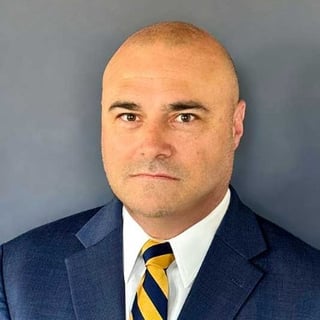
Phil Gonshak is the Director of Public Safety Strategy at Skydio, where he helps public safety agencies across the country scale their Drone as First Responder (DFR) programs using Skydio's autonomous drone technology. With deep roots in law enforcement leadership, Phil brings firsthand experience in transforming emergency response through innovation. At Skydio, he draws on his operational expertise to help agencies move faster, safer, and smarter—leveraging drones to get eyes on scene in seconds and deliver better outcomes for the communities they serve.
Prior to joining Skydio, Phil served as the Chief of Police for the Seal Beach Police Department in California, where he launched one of the nation’s earliest patrol-led DFR programs. Over his 20+ year career in public safety, he held a wide range of roles including SWAT Operator, Undercover Narcotics Detective, and later Director of Strategic Initiatives for the Denver Police Department. He is a graduate of the FBI National Academy and holds a Master’s in Public Administration from Cal State Long Beach.
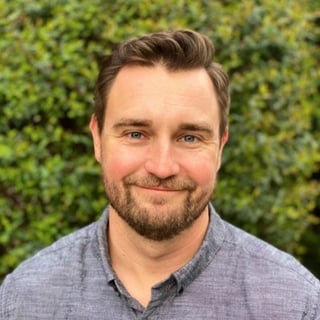
Kabe Termes is a UAS industry leader, DFR (Drone as First Responder) co-inventor, entrepreneur, and go-to-market leader with over 15 years of experience driving innovation, influencing drone regulations, and ensuring customer success across public safety, federal, and commercial sectors.
As one of Skydio’s first enterprise-focused hires, Kabe joined the company in 2020 to help lead the pivotal transition from consumer drones to enterprise and government solutions.
In his current role as Senior Director of Solutions Engineering, he leads an international team of subject matter experts delivering mission-critical autonomous drone programs for agencies and organizations across four continents.
Before Skydio, Kabe was a key architect of the modern DFR movement. At Cape, he served as Director of Business Operations and Regulatory Compliance, where he partnered with Chula Vista PD to help launch the first Drone as First Responder program in the country—a milestone that continues to influence public safety drone programs today.
After Cape was acquired by Motorola Solutions, he led the go-to-market launch and customer success strategy for the Motorola Aerial Suite.
Kabe is also a licensed private pilot and enjoys flying his family around in his spare time.
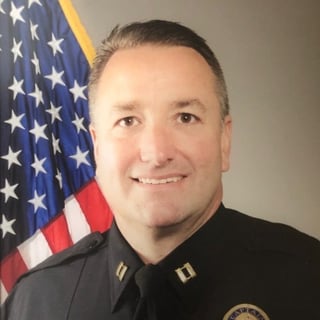
Vern is an Axon Air Strategist dedicated to helping public safety agencies build world-class UAS programs that enhance officer and community safety. Before joining Axon, he led the Chula Vista Police Department’s (CVPD) pioneering Drone as a First Responder (DFR) program, seeing firsthand how drones provide life-saving intelligence for de-escalation and better public safety outcomes.
A 25-year law enforcement veteran, Vern retired as Patrol Operations Division Captain and played a key role in evolving CVPD’s UAS program. He has presented at major police and UAS conferences, co-testified before the President's Commission on Law Enforcement, and is a graduate of the FBI National Academy and California P.O.S.T. Command College.
SUMMARY
In this fireside chat, Phil Gonshak of Skydio hosts a discussion with public safety drone pioneers Vern Sallee of Axon and Kabe Termes of Skydio. They reflect on the origins of the Drone as First Responder (DFR) program at Chula Vista Police Department, the public-private partnerships that enabled it, and the regulatory and community transparency challenges they overcame. The conversation explores how DFR has evolved from early rooftop operations to today’s autonomous, dock-based deployments powered by Skydio’s X10 drones and Axon’s integrated ecosystem. They highlight the shift from drone programs as tactical tools to scalable infrastructure that supports multiple city functions, and the unique advantages of the Skydio-Axon partnership in reliability, real-time awareness, and policy-compliant deployment. The session concludes with audience Q&A on COA processes, community engagement, rural connectivity, and Skydio's roadmap for scaling drone use across public safety and beyond.
TRANSCRIPT
Phil: Alright. Welcome, everybody. Thanks for joining us on a beautiful Wednesday morning here. I have two fantastic pioneers of Drone as First Responder, both from Axon and Skydio. My name is Phil Gonshak.
I’m the Director of Strategic Initiatives for Skydio, and I'm happy to be here in the presence of these two pioneers, and of course, all of you joining us live. Let me do some brief introductions, and then we'll jump right in since we're driving down fifty-nine minutes from now. So it's my pleasure. Vern, nice to have you here.
Vern is a nationally recognized leader in public safety drone innovation and currently the Axon Air Strategist at Axon. Vern brings over twenty-five years of distinguished law enforcement experience — pretty fantastic considering it’s Police Memorial Week. He retired as the Patrol Operations Division Captain and the second-in-command of the Chula Vista Police Department. He founded and led the department's pioneering Drone as First Responder (DFR) program — now a national model for integrating unmanned aerial systems into emergency response.
As a subject matter expert, Vern has presented at major national and international conferences, advised on federal working groups, and co-testified before the President’s Commission on Law Enforcement regarding the use of drones in policing. He’s also a graduate of the FBI National Academy — 260, right Vern?
Vern: That’s right — 260.
Phil: And also a graduate of the California POST Command College — very impressive. Now at Axon, Vern helps agencies across the country develop world-class unmanned aerial system programs, focusing on leveraging drone technology to improve officer safety, enhance community outcomes, and support transparency in policing. Please join me in welcoming Vern Sallee.
Vern: Thanks so much. Appreciate it.
Phil: You bet. Next, but certainly not least, I’m excited to introduce a good friend of mine, Kabe Termes — a recognized UAS industry leader and co-inventor of the Drone as First Responder model. With over fifteen years of experience spanning public safety, federal, and commercial sectors, Kabe has driven innovation, shaped drone regulations, and ensured customer success.
Kabe is the Senior Director of Solutions Engineering at Skydio, where he leads an international team delivering mission-critical autonomous drone solutions across four continents. He was one of Skydio’s first enterprise-focused hires, pivotal in transitioning the company from consumer drones to advanced enterprise and government deployments.
Before joining Skydio, Kabe helped launch the nation's first DFR program alongside Vern at the Chula Vista Police Department while he was working at Cape. That work set a national precedent for public safety drone operations.
After Cape’s acquisition by Motorola Solutions, Kabe led the go-to-market strategy for Motorola’s aerial suite. Please join me in welcoming Kabe Termes.
Kabe: Happy to be here.
Phil: Just a modest intro to two major pioneers. It’s incredible to be among you both as we walk through what’s working in DFR, what’s not, and what’s coming next. We talked about this before the cameras came on, but it’s important to start with the beginning.
So, Kabe, let’s start with you — talk about your early days at Cape and walk us through what you’re doing today at Skydio. Let’s explore what was, what is, and where we’re headed next.
Phil: Let’s talk about drones as infrastructure. We touched on this briefly, but Vern, I’d love for you to share your perspective on the broader applications for drones — beyond just public safety.
Vern: Absolutely. Huge credit goes to Adam Bry, the CEO of Skydio, who really shifted my thinking when he started talking about drones as infrastructure. That’s the evolution from DFR 1.0 and 2.0. Once you’ve saturated a coverage area with a hive system, and you're handling your core DFR mission set, you still have drones available between calls.
So how can you use those drones to provide value across city or county departments? Pre-storm inspections of flood channels. Post-storm documentation for FEMA. Inspecting critical infrastructure. Situational awareness during wildfires or landslides. Even facilities inspections. These are all real, practical applications that extend the value of a single drone system.
Skydio actually has deep roots in infrastructure inspection. They’ve been used in Japan to inspect bridges and power lines. That kind of autonomy and precision makes them ideal for urban environments too.
Kabe: Exactly. This is where the idea of drones as shared infrastructure really shines. One drone, multiple missions — public safety, utilities, environmental monitoring, emergency management. All without sending a person into a hazardous environment just to gather basic situational data.
And the fact that it’s the same drone platform, whether it’s in a dock or being deployed from a patrol vehicle, makes this even more powerful. You’re not just buying a drone. You’re investing in a scalable ecosystem.
Phil: That brings up the value of the Axon and Skydio partnership. Not just from a hardware or operations standpoint, but because of how deep the tech stacks go. Both companies build their own products — full stack, top to bottom. That’s rare.
Vern: Right. At Axon, we own the whole ecosystem — from body-worn cameras, fleet video, records, dispatch, to FUSUS and Evidence.com. Skydio is the same — complete ownership of their drone platform, autonomy engine, and Skydio Dock. That allows us to integrate in ways no one else can.
The connection between our products is foundational. We’ve already integrated body-worn cameras into the Skydio piloting interface — you can see where your officers are, where their cameras are pointing, and orient your drone footage accordingly. That’s powerful situational awareness.
Kabe: And that’s just the beginning. Skydio’s ReadyLink live-streaming, integrated with Axon FUSUS, makes it easier than ever to get critical drone video in front of command staff, dispatch, or operations centers. We’re creating a seamless workflow from drone to decision.
Vern: And the AI potential is massive. At Axon, we’re investing deeply in AI to analyze video from drones, body cameras, and fixed cameras. Integrating that into our workflows is going to change how policing is done — proactive, efficient, and safer for officers and communities.
Kabe: That was my dream too — coming to Skydio after working on the ground floor of this. We’ve built and scaled drone programs the hard way. Now we’re creating the systems to make this easier and more powerful for everyone.
Phil: Love that. OK — I think we’re going to wrap this segment and head into Q&A. Thanks to both of you for this incredible deep dive. Let’s see what questions our audience has.
(Transition to audience Q&A)
Phil: Our first question comes from Casey Stavert, Compliance Inspection Supervisor at the New Mexico Environment Department. They ask, "I’m currently working to create our drone program here in New Mexico. What steps did you take with the public to ensure you could utilize drones over properties?"
Vern: Community outreach was foundational at Chula Vista. From the start, we understood that if we didn’t tell our story, someone else would — and it wouldn’t be to our benefit. So we held community forums, asked for policy input, even reached out to the ACLU to understand concerns. We didn’t take every suggestion, but we found compromise, like adjusting our data retention policy.
We also created a public-facing transparency dashboard. It showed the location and nature of every drone flight. We made our DFR policy clear — our drones do not patrol randomly. They only launch in response to a 911 call. We also created a dedicated email address so community members could ask questions and engage directly with our drone team.
Kabe: And now, with Skydio DFR Command, that transparency is built into the software. Agencies can publish their own dashboards showing telemetry, launch and land times, and even the angles the cameras were pointed. That’s built-in trust and accountability.
Phil: Our next question is from David Wohlgemuth, a patrol officer with Livonia Police Department in Michigan. He asks, “How do you get around the FAA line of sight requirement?”
Kabe: Great question. There are two main paths — under Part 107 with a waiver, or under a public Certificate of Authorization (COA). We recommend the COA route for public safety. Skydio has a dedicated regulatory team that helps agencies navigate this. And our website has detailed resources on how to get started.
With a COA in place, agencies can apply for Beyond Visual Line of Sight (BVLOS) waivers, especially for shielded operations — flying low and close to buildings or terrain. The autonomy and obstacle avoidance in the Skydio X10 is key here.
Vern: And I’ll add that two great nonprofit organizations also support this work: droneresponders.org and LIDA.org (Law Enforcement Drone Association). They offer free resources, best practices, and great events. I also encourage folks to contact me directly — [email protected] — if I can help.
Phil: Next question — John Domingo from Cherry Hill Police asks, "If the goal is to have drones respond autonomously without someone on the roof, how do you verify airworthiness?"
Kabe: Another great one. The X10 Dock has built-in inspection mode. Cameras inside the dock visually inspect the drone, spin the props, and check for issues. We also perform software-level health checks before every flight. Combined, this meets FAA airworthiness expectations. Vern: And yes, while inspection mode is great, we still recommend periodic physical inspections — maybe daily or weekly depending on usage. But this eliminates the need for someone standing on the roof 24/7.
Phil: Nicholas Payne, Detective and Drone Team Lead at Elko County Sheriff’s Office, asks, “How does the DFR dock operate in rural areas where connectivity is limited?”
Kabe: Good question. Skydio’s Connect Fusion uses both direct RF and LTE. In remote areas, we rely on external antennas for strong point-to-point connection. And if LTE is available — even via Starlink — we can switch over seamlessly.
Also, we’ve tested and deployed ruggedized trailers with solar and battery packs that can run docks for days, even in off-grid areas. Skydio’s dock was designed for deployment in challenging environments.
Phil: And one more from Scott Porter, Public Safety Practice Lead at Seneca Holdings. “Can you talk about key integrations between Skydio and Axon, like streaming video to Evidence.com?”
Vern: Yes — live streaming is integrated with Fusus today. The drone’s video stream can be pulled into the same pane of glass as body-worn and vehicle cameras. We also have integrations in progress that push Skydio footage directly into Evidence.com.
Kabe: Our APIs allow us to link drone video with real-time officer locations and camera views. Soon, officers will be able to press a button on their Axon body camera and request drone support automatically.
Phil: Last one — what’s the vision for Skydio and Axon over the next five years?
Vern: At Axon, we’re all-in on DFR. Our CEO, Rick Smith, is flying drones himself. We see a future where FUSUS becomes a citywide infrastructure platform, combining every sensor feed — including Skydio — for a real-time, AI-enabled command center.
Kabe: Same from our side. We’re focused on scale. Skydio now builds thousands of drones annually, all from our California facility. The X10 Dock is our third-generation dock. It’s designed for deployment, reliability, and portability.
The future is DFR for public safety — but also shared drone infrastructure across all city departments.
Phil: Thanks to you both — and to everyone who joined us. Great questions, great insights. We’ll see you next time!